Radon Testing

Be Protected

WHAT IS RADON ?

Radon is a chemical element and is a radioactive, colorless, odorless, tasteless noble gas.
It occurs naturally in minute quantities as an intermediate step in the normal radioactive decay chains through which thorium and uranium slowly decay into lead and various other short-lived radioactive elements.

Unlike all other intermediate elements in the aforementioned decay chains, radon is, under standard conditions, gaseous and easily inhaled, and therefore a health hazard.

It is often the single largest contributor to an individual's background radiation dose, but due to local differences in geology,[3] the level of exposure to radon gas differs from place to place.

A common source is uranium-containing minerals in the ground. Due to its density, it can especially accumulate in subterranean areas such as basements. Radon can also occur in some ground water like spring waters and hot springs.

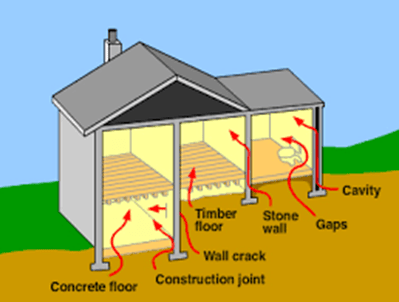
Radon typically moves up through the ground to the air above and into your home through cracks and other holes in the foundation. Radon can also enter your home through well water. Your home can trap radon inside.
There are generic and recognised tests for radon gas, these tests are methodically done in areas of known systematic hazards. Short-term radon test devices used for initial screening purposes are inexpensive.
There are important protocols for taking short-term radon tests and it is imperative that they be strictly followed, therefore it is in the interest of those with concern to commission a recognised consultant and analytical testing laboratory.
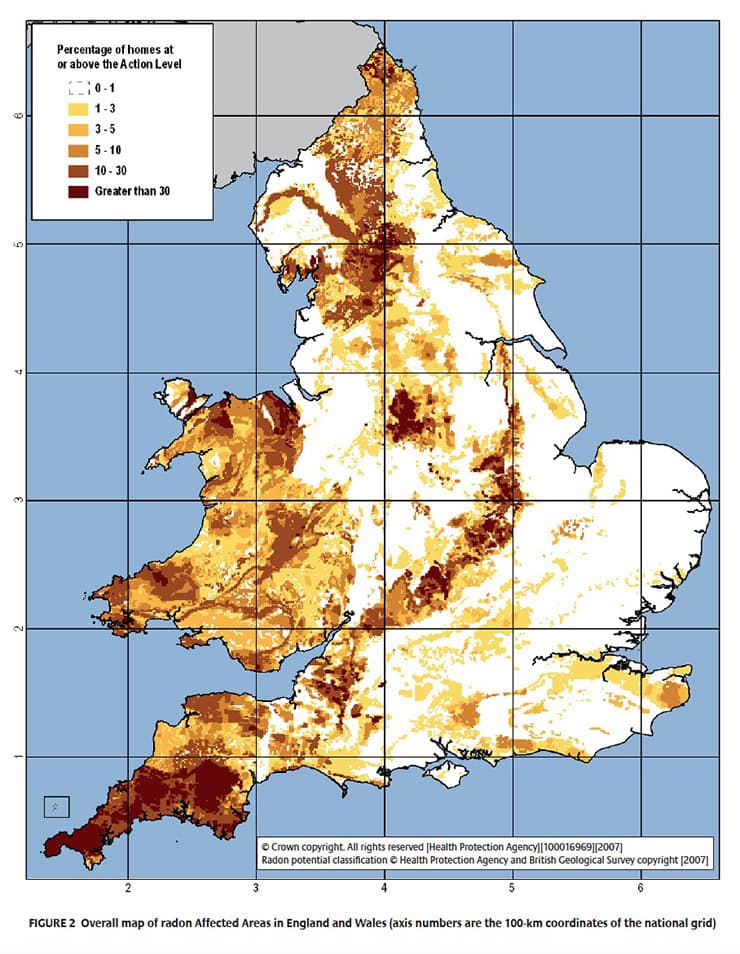
RADON AREAS OF DENSITY & PERCENTAGE

All employers and those empowered to ensure the safety of those having use of a building must:

Engage a responsible person to compile a generic risk assessments within a workplace, and a general safety assessment of the building and the buildings boundaries, meaning that it is their responsibility to ensure this is carried out.

An employer or buildings landlord or landlords agent may appoint an appropriate individual or company to carry out a risk assessment on behalf of the organisation, as long as they are competent to do so and attain correct competence to execute and compile the health and safety assessment.

Hazard identification and risk assessment will help you:

  1. Recognise and control hazards in your workplace.
  2. Create awareness among your employees – and use it as a training tool as well.
  3. Set risk management standards, based on acceptable safe practices and legal requirements.
  4. Reduce incidents in the workplace.
  5. Comply with the regulation pertaining to safe working practices
REQUEST A

CALLBACK

If you would like to find out more about how JHA Safety Project Management can help you, please send us a message and we will get straight back to you.